
Home
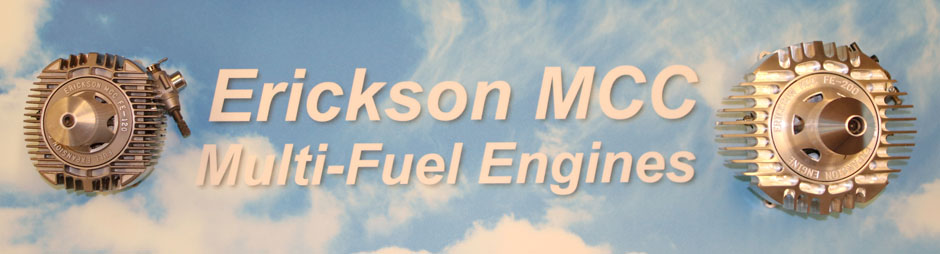
Erickson Motors and our parent company Engine Research Associates, Inc. (ERA) are the developers and manufacturers of the Erickson Migrating Combustion Chamber (MCC) Engine. Erickson Motors is the commercial division of ERA. ERA’s main focus is military and government research and development programs such as engines for generators and Unmanned Aerial Systems or drones. Our MCC Engine technology was originally invented and patented in the United States by ERA. MCC engines offer a new operating cycle providing high efficiency, low vibration, low emissions, low cost production, scalable power, multi-fuel operation and a very quiet and cool exhaust without the need for a muffler or spark arrestor. Our MCC Full Expansion engine technology offers benefits that can’t be easily achieved with conventional two-stroke, four-stroke, and rotary (Wankel) engine technology. This engine technology is so unique that both the cycle of operation and the engine mechanism were patented. It provides operation on low octane fuels including zero octane gasoline (N-Heptane) without auto-ignition or detonation (knock). MCC engines can operate on many fuels including Bio-Fuels, E85, JP-8, JP-4, Diesel and standard gasoline. Erickson MCC Engine technology can provide many benefits for following internal combustion engine applications: Multi-fuel, covert drones, hybrid vehicles, generators, lawn and garden equipment, tractors, motorcycles, automotive, marine and aircraft.